





Find the right security camera system in 4 quick steps
No spec sheets, no guesswork. Answer a few questions about your property and we'll match you with the ZOSI kit that actually fits.
Do you need a wired or wireless system?
This is the biggest decision — it decides everything else.
Which resolution are you looking for?
Higher resolution = more detail when you zoom in.
Do you have a preference on camera style?
Pick how you want the cameras to look.
How many cameras do you need?
The NVR channel count must cover your cameras.
Here's your match
Based on your answers, these kits fit your setup. Each one includes the NVR with a hard drive, so you can record out of the box.
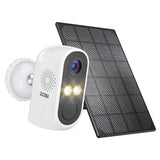
Talk to a security advisor
Tell us the size of your property and what you want to cover. We will recommend the exact channel count, camera mix and cabling plan — no obligation.
Recommendations are based on your answers.
How Many Security Cameras Do You Need? A Sizing Guide by Property Size
Most people size a camera system by counting rooms — that's the wrong way to do it. What actually matters is how many coverage points your property has: every door, driveway, yard corner and cash register. The tables below use typical U.S. property sizes (U.S. Census Bureau / NAHB data) to help you estimate the right system in under a minute. Prefer to have it done for you? Use our 4-step selector above.
Typical U.S. home sizes (2025 baseline)
| Property | Typical lot size | Typical house size | Cameras |
|---|---|---|---|
| Apartment / rental | n/a (shared outdoor) | 600–1,200 sq ft | 1–3, wireless |
| Small / starter home | 4,000–8,000 sq ft | 1,200–1,800 sq ft | 3–5 |
| Suburban house (median new build) | ~8,543 sq ft (≈1/5 acre) | 2,000–2,400 sq ft | 4–8 |
| Large home / estate | 0.5–1+ acre | 3,000+ sq ft | 8–16+ |
Source: U.S. Census Bureau Survey of Construction & NAHB analysis, 2025 — median lot for new single-family homes is 8,543 sq ft; median house size is 2,176 sq ft.
Driveways & garages: the view most cameras are bought for
| Layout | Typical size | Area | What it takes to cover it |
|---|---|---|---|
| Single car, short | 10 × 20 ft | 200 sq ft | 1 wide-angle camera is enough |
| Single car, standard | 12 × 40 ft | 480 sq ft | 1 4K camera |
| Double, standard (most common) | 20 × 30 ft | 600 sq ft | 1 4K camera, or 2 if you need faces / plates |
| Double, deep | 24 × 40 ft | 960 sq ft | 2 cameras, or 1 PTZ + 1 fixed |
| Three-car | 30 × 30 ft | 900 sq ft | 2 cameras + 1 on the garage door |
| Long rural lane | 12 × 150 ft | 1,800 sq ft | 2–3 cameras in relay, or a long-range lens |
| Circular drive | 60–70 ft across | 1,700–1,900 sq ft | 1 PTZ on auto-cruise |
| Two-car garage (inside) | 18×20 to 24×24 ft | 400–576 sq ft | 1 indoor camera |
Business sizing by floor area
| Business type | Typical size | Cameras | Cover first |
|---|---|---|---|
| Convenience / small retail | under 2,000 sq ft | 4–8 | Register, entrance, aisles, stockroom |
| Retail (per 1,000–2,500 sq ft) | scale with floor | 4–8 | POS, high-value displays, back door |
| Restaurant / café | 2,000–4,000 sq ft | 6–12 | POS, kitchen entry, dining, rear door |
| Office | 5,000–20,000 sq ft | 8–16 | Lobby, corridors, server room, lot |
| Warehouse | 10,000–50,000+ sq ft | 12–32+ | Loading docks, aisles, perimeter, gates |
| Parking lot | varies | 16–48+ | Entries, stairwells, low-light zones |
How far can a security camera actually see?
Resolution is only half the story — the lens angle decides the useful distance. These are conservative planning numbers for identification (recognizing a person), not just noticing motion:
| Camera type | Field of view | Useful by day | Useful at night | Best for |
|---|---|---|---|---|
| Video doorbell | ~135° | 30 ft | 25 ft | Porch & package deliveries |
| Wide-angle (2.8mm) | ~110° | 55 ft | 45 ft | Close driveways, indoor halls |
| Standard 4K | ~87° | 90 ft | 70 ft | Driveway + front yard (most versatile) |
| 4K long-range | ~70° | 110 ft | 90 ft | Longer driveways, detail zones |
| PTZ | variable | — | — | Open areas; 1 PTZ can replace 3–5 fixed cams |
Rule of thumb: to identify a face you want roughly 80+ pixels per foot of scene width; 20–40 pixels per foot is enough to detect that "something happened". Point your identification cameras at doors and registers; detection-level coverage is fine for fence lines.
The sizing formula installers actually use
+ driveway / parking (1 if narrower than 20 ft; wider or plates needed → 2, or 1 PTZ)
+ backyard / fence line (1 per corner, or 1 per 60–80 ft of straight run)
+ garage, shed, side gates (1 each)
+ high-value interiors: register, safe, server room (1 each)
+ 10–20% spare for blind spots
Counting coverage points — not square footage — is how professionals quote a job. A 2,000 sq ft house with one door and a short drive may need only 3 cameras, while the same house with a long driveway and two side gates needs 6. Mounting height matters too: 7–9 ft at entrances to capture faces, 9–12 ft for perimeters and parking.
Quick answers
- How many cameras for a 2,000 sq ft house? Typically 4–8: front door, driveway, backyard, side gate and garage, plus one interior if wanted.
- How big is a typical U.S. lot? The median new single-family lot is about 8,543 sq ft — just under one-fifth of an acre.
- Is more square footage always more cameras? No. Count doors, driveways and corners first; area only matters when it stretches the distances one camera must cover.
- Do I need 4K? If you want to identify faces or plates beyond about 45 ft, yes — 4K holds detail at distance that 1080p cannot.
Ready to match a kit to your property? Find My System in 30 Seconds
Explore wired options in our 4K PoE systems, cable-free picks in Wi-Fi cameras, or power-independent coverage in battery & solar cameras.